
Detrás de la editora: lo que aprendí cuando las palabras de otros intentaron callarme

POR Natalie Schiaverano
Behind the editor: what I learned when other people's words tried to silence me
Hay una pregunta que Maxwell Maltz, cirujano plástico convertido en uno de los psicólogos más influyentes del siglo XX, se hizo toda su vida: ¿por qué hay personas que, aun teniendo todo para brillar, se apagan? La respuesta que encontró la plasmó en Psico Cibernética, un libro que llevo semanas subrayando con una especie de reconocimiento incómodo. Ese reconocimiento que aparece cuando alguien describe, con precisión quirúrgica, algo que viviste pero nunca supiste nombrar.
There is a question that Maxwell Maltz — a plastic surgeon who became one of the most influential psychologists of the 20th century — asked himself his entire life: why do some people, even with everything they need to shine, end up dimming? The answer he found is captured in Psycho-Cybernetics, a book I've spent weeks underlining with a kind of uncomfortable recognition. The kind that surfaces when someone describes, with surgical precision, something you lived but never knew how to name.
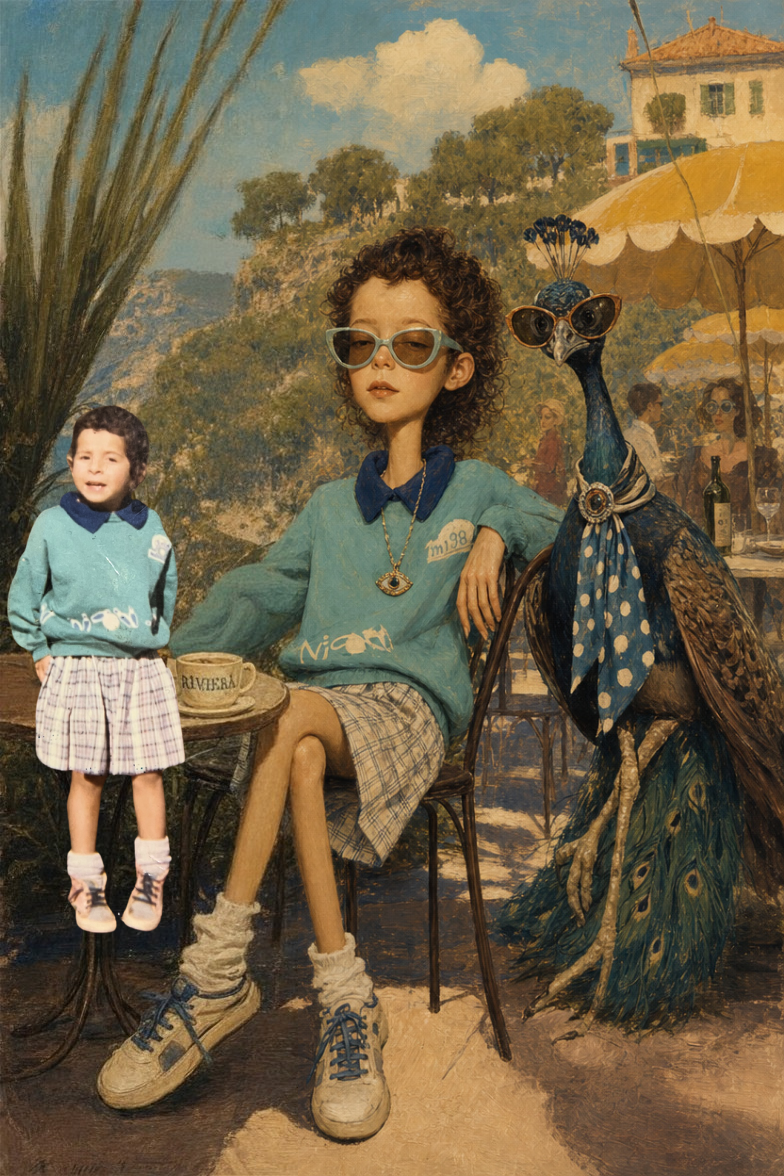
Maltz escribe que "la personalidad no es algo que se adquiere desde fuera, sino algo que se libera desde dentro." Y añade algo que me detuvo en seco: que cuando decimos que alguien tiene una "personalidad débil", en realidad estamos diciendo que esa persona ha reprimido su yo creativo interno. Lo ha esposado, lo ha encerrado y ha tirado la llave.
Yo tiré esa llave a los doce años.
El bullying hace eso. No llega con golpes siempre — a veces llega con risas en el momento equivocado, con un apodo que se convierte en identidad, con la mirada de un grupo que te dice, sin palabras, que lo que eres no es suficiente. Y tú, que eres niña y no tienes aún las herramientas para cuestionarlo, lo crees. Empiezas a editar tu propia existencia antes de que alguien más lo haga. Te vuelves pequeña por voluntad propia, porque pequeña duele menos.
Maltz writes that personality is not something acquired from the outside, but something that is liberated from within. And he adds something that stopped me cold: that when we say someone has a "weak personality," what we're really saying is that they have suppressed their inner creative self. Handcuffed it, locked it away, and thrown away the key.
I threw that key away at twelve years old.
Bullying does that. It doesn't always come with physical blows — sometimes it arrives as laughter at the wrong moment, a nickname that becomes an identity, the gaze of a group that tells you, without words, that what you are is not enough. And you, a child without the tools yet to question it, believe them. You start editing your own existence before anyone else can. You make yourself small on purpose, because small hurts less.
Lo que Maltz describe como "personalidad inhibida" — esa persona que manifiesta frustración en casi todas las áreas de su vida porque en el fondo no ha logrado "ser ella misma" — era yo. No lo habría dicho así entonces. Habría dicho que era tímida. Que era rara. Que no encajaba.
Qué irónico, entonces, que haya terminado siendo editora.
Porque detrás de quien cuida las palabras de otros, hay alguien que primero tuvo que aprender que las suyas valían algo. Que el lenguaje — ese mismo instrumento que otros usaron para reducirme — podía también ser el lugar donde me encontrara. Editar no es solo corregir. Es escuchar lo que alguien quiere decir antes de que sepa cómo decirlo. Es creer en una voz antes de que ella misma se crea. Y para hacer eso bien, creo que necesitas haber estado en el otro lado: haber sido la que no encontraba las palabras, la que sentía que su historia no merecía ser contada.
What Maltz describes as an "inhibited personality" — someone who shows frustration in almost every area of their life because deep down they have never managed to "be themselves" — was me. I wouldn't have put it that way back then. I would have said I was shy. That I was weird. That I didn't fit in.
How ironic, then, that I ended up becoming an editor.
Because behind the person who takes care of other people's words, there is someone who first had to learn that her own words were worth something. That language — the very instrument others used to diminish me — could also be the place where I found myself. Editing is not just correcting. It is listening to what someone wants to say before they know how to say it. It is believing in a voice before that voice believes in itself. And to do that well, I think you need to have been on the other side: to have been the one who couldn't find the words, the one who felt her story wasn't worth telling.
Eso es exactamente lo que pasó conmigo, aunque tardó años.
No hubo un momento dramático de transformación. Fue más lento y más silencioso: un libro que me hizo sentir vista, una conversación que me devolvió algo, un texto propio que decidí no borrar. La personalidad no se construye de golpe — se va liberando en capas, cada vez que te permites un poco más de verdad.
Hoy edito desde ese lugar. Desde la certeza de que toda persona carga consigo, como dice Maltz, "un verdadero yo que es atractivo, magnético, con un fuerte impacto en los demás" — y que ese yo no desaparece cuando lo silencian. Solo espera. A veces espera mucho tiempo, pero espera.
Si algo me dejó el bullying — y me cuesta escribir esto sin cierta resistencia — es una sensibilidad particular hacia las voces que todavía no saben que importan. Las reconozco. Fui una de ellas.
Y si estás leyendo esto y sientes que tu personalidad está más encerrada que liberada: no perdiste la llave. Solo la guardaste muy bien.
Psico Cibernética, Dr. Maxwell Maltz. Léelo con lápiz en mano.
Maltz also speaks of excessive self-criticism as the great obstacle. He cites research showing that when negative internal feedback — that relentless inner judge — is removed, "inhibition disappears and performance improves." Not because the person has changed, but because they finally allow themselves to be what they already were.
That is exactly what happened to me, though it took years.
There was no dramatic moment of transformation. It was slower and quieter than that: a book that made me feel seen, a conversation that gave something back to me, a piece of my own writing I decided not to delete. Personality is not built all at once — it is released in layers, each time you allow yourself a little more truth.
Today I edit from that place. From the certainty that every person carries within them, as Maltz says, a true self that is attractive, magnetic, with a strong impact on others — and that self does not disappear when silenced. It only waits. Sometimes it waits a very long time, but it waits.
If the bullying left me with anything — and I write this with some resistance — it is a particular sensitivity toward voices that don't yet know they matter. I recognize them. I was one of them.
And if you're reading this and feel that your personality is more locked away than liberated: you didn't lose the key. You just kept it somewhere very safe.
Psycho-Cybernetics, Dr. Maxwell Maltz. Read it with a pencil in hand.


Comentarios